Category: Math & Stats

  • Renaissance Technologies: Secrets of Top Quant Fund

    Renaissance Technologies: Secrets of Top Quant Fund

    This blog post delves into the history, achievements, and future of Renaissance Technologies, one of the world’s most successful quantitative hedge funds. The firm’s innovative trading strategies, focus on cutting-edge research, and exceptional talent pool have propelled it to the forefront of the finance industry. As the landscape evolves, Renaissance Technologies must adapt and leverage technologies like artificial intelligence and machine learning to maintain its competitive edge.

    Introduction:

    In finance, few names are as synonymous with unparalleled success as Renaissance Technologies. Founded by the brilliant mathematician and code-breaker James Simons, Renaissance Technologies has consistently outperformed the market through its flagship Medallion Fund, achieving legendary status among quantitative hedge funds. As quantitative trading continues to shape and influence the finance industry, understanding the inner workings of this secretive and highly successful quant fund becomes increasingly essential.

    This blog post explores the fascinating history, remarkable achievements, and prospects of Renaissance Technologies. By delving into the factors that have contributed to the firm’s success, we can gain valuable insights into the world of quantitative trading and better comprehend the driving forces behind one of the most successful hedge funds in history.

    Origins of Renaissance Technologies:

    James Simons, the founder of Renaissance Technologies, has a remarkable experience in mathematics and code-breaking. He earned his Ph.D. in mathematics at 23 from the University of California, Berkeley, and later worked as a mathematician and code-breaker for the Institute for Defense Analyses. Simons’ expertise in mathematics and cryptography laid the foundation for his foray into finance, where he applied his skills to develop innovative quantitative trading strategies.

    Renaissance Technologies was founded in 1982 by James Simons, who saw an opportunity to leverage his mathematical prowess and algorithmic thinking to revolutionize investment decision-making. The firm started as a small operation but grew rapidly as its unconventional trading and asset management approach yielded impressive results.

    One of the critical milestones in the early history of Renaissance Technologies was the development of the Medallion Fund, launched in 1988. The fund utilized advanced mathematical models, algorithms, and data analysis techniques to identify and exploit inefficiencies in financial markets. The Medallion Fund quickly gained a reputation for delivering extraordinary returns, far outpacing traditional investment strategies. This success helped establish Renaissance Technologies as a pioneer in quantitative finance and set the stage for the firm’s continued growth and expansion.

    Achievements and Milestones:

    One of the most significant achievements of Renaissance Technologies is the exceptional performance of its flagship Medallion Fund. The fund has consistently delivered remarkable returns, often surpassing 30% annually, even after accounting for hefty fees. This extraordinary performance has cemented the Medallion Fund’s status as one of history’s most successful investment funds. It has generated substantial wealth for the firm’s employees and investors.

    Due to the impressive performance of the Medallion Fund and other investment offerings, Renaissance Technologies has experienced significant growth in its asset base over the years. The firm now manages tens of billions of dollars in assets, making it one of the world’s largest and most influential hedge funds. This growth has further allowed Renaissance Technologies to expand its research capabilities and investment strategies, ensuring its continued success in quantitative finance.

    The success of Renaissance Technologies has profoundly impacted the hedge fund industry as a whole. The firm’s innovative use of advanced mathematical models and algorithms to guide investment decisions has inspired a wave of quant fund startups and pushed other hedge funds to adopt similar approaches. This shift has increased emphasis on data analysis, computational power, and recruiting top talent from diverse fields such as mathematics, computer science, and physics, ultimately transforming investment management across the industry.

    Lines of Business, Products, and Services:

    • The Medallion Fund

    The Medallion Fund is the flagship product of Renaissance Technologies and is a prime example of the firm’s prowess in quantitative trading. The fund primarily focuses on generating exceptional returns by exploiting market inefficiencies using sophisticated mathematical models and algorithms. The extraordinary performance of the Medallion Fund has made it one of the most sought-after investment vehicles among institutional investors and high-net-worth individuals.

    • Institutional Equities Fund and other offerings

    While the Medallion Fund is the most well-known offering from Renaissance Technologies, the firm also manages additional investment funds, such as the Institutional Equities Fund (IEF). The IEF primarily invests in global equities and employs quantitative trading strategies similar to those used in the Medallion Fund. These additional investment offerings enable Renaissance Technologies to cater to a broader range of investors and further diversify its sources of revenue.

    • Proprietary trading technologies and techniques

    One key factor differentiating Renaissance Technologies is its proprietary trading technologies and techniques. The firm continually invests in cutting-edge research and development to refine and enhance its quantitative models and algorithms. This relentless pursuit of innovation allows Renaissance Technologies to stay ahead of the curve and maintain its competitive edge in the ever-evolving world of finance. The company’s commitment to protecting its intellectual property and maintaining high secrecy around its trading strategies further contributes to its success.

    Competitors:

    • Citadel

    Citadel, founded by Ken Griffin in 1990, is a leading global financial institution that operates as both a hedge fund and a market maker. The firm is known for its advanced quantitative trading strategies and has consistently been a top performer in the industry.

    • DE Shaw

    Established in 1988 by David E. Shaw, DE Shaw is a global investment management firm specializing in systematic and quantitative trading. The firm is a pioneer in computational finance and has a strong reputation for its innovative and research-driven approach to investing.

    • Two Sigma

    Founded in 2001 by John Overdeck and David Siegel, Two Sigma is a technology-driven investment management firm that uses advanced data analytics, artificial intelligence, and machine learning to develop and execute its trading strategies. The firm has rapidly grown into one of the leading quant funds in the world.

    • AQR Capital Management

    AQR Capital Management, founded in 1998 by Cliff Asness, is a global investment management firm known for its quantitative, research-based approach to investing. The firm offers various investment products, including hedge funds, mutual funds, and alternative investments.

    • Bridgewater Associates

    Bridgewater Associates, founded by Ray Dalio in 1975, is the world’s largest hedge fund, managing approximately $150 billion in assets. Though not exclusively a quant fund, Bridgewater employs a systematic, data-driven approach to investing, emphasizing macroeconomic factors and risk management. The firm’s flagship product, the Pure Alpha fund, has a long track record of solid performance.

    Competitive Advantages of Renaissance Technologies:

    • Exceptional talent pool and interdisciplinary approach

    One of the main competitive advantages of Renaissance Technologies is its exceptional talent pool. The firm actively recruits brilliant minds from diverse fields, such as mathematics, physics, computer science, and engineering, fostering a culture of interdisciplinary collaboration. This approach allows Renaissance Technologies to combine insights from various disciplines, developing innovative and highly effective quantitative trading strategies.

    • Emphasis on secrecy and intellectual property protection

    Renaissance Technologies strongly emphasizes maintaining secrecy around its trading strategies and algorithms. The firm is known for its stringent non-disclosure agreements and limited external communication, which help protect its intellectual property and maintain its competitive edge. This secrecy also contributes to the firm’s mystique, further enhancing its reputation within the finance industry.

    • Cutting-edge research and technology

    Renaissance Technologies is at the forefront of research and technological advancements in quantitative finance. The firm invests heavily in research and development to ensure its trading strategies remain ahead of the curve. By leveraging state-of-the-art technology, advanced data analytics, and sophisticated mathematical models, Renaissance Technologies can identify and exploit market inefficiencies more effectively than its competitors.

    • Focus on continuous improvement and innovation.

    Another critical competitive advantage of Renaissance Technologies is its relentless pursuit of progress and innovation. The firm constantly refines and updates its trading models and algorithms to adapt to changing market conditions and capitalize on new opportunities. This focus on continuous improvement allows Renaissance Technologies to maintain its position as a leader in the quantitative trading space and sustain its impressive track record of performance.

    The Future of Renaissance Technologies:

    As the financial landscape evolves, Renaissance Technologies may face challenges maintaining its competitive edge. Regulatory changes, increased competition from other quant funds and traditional investment firms, and shifting market dynamics could all pose challenges for the firm. To stay ahead, Renaissance Technologies must continue investing in research and development and adapt its strategies to navigate these potential obstacles.

    Artificial intelligence (AI) and machine learning (ML) will play an increasingly important role in quantitative trading. These technologies could revolutionize how fund managers analyze the markets and make investment decisions. With its strong focus on research and cutting-edge technology, Renaissance Technologies is well-positioned to capitalize on these advancements. By embracing AI and ML, the firm can refine its trading strategies, improve its predictive capabilities, and identify new profit opportunities.

    As Renaissance Technologies looks to the future, it may consider expanding into new markets or asset classes to diversify its investment offerings and revenue streams. The options could include exploring opportunities in emerging markets, alternative investments, or expanding its suite of investment products to cater to a broader range of investors. By continually seeking new growth opportunities, Renaissance Technologies can maintain its position as a leader in quantitative finance and ensure its continued success in the face of an ever-evolving financial landscape.

    Conclusion:

    Throughout this blog post, we have explored the origins of Renaissance Technologies, its extraordinary achievements and milestones, and the firm’s various lines of business, products, and services. We have also examined the competitive landscape, highlighting the major players in the quantitative finance industry, and discussed the competitive advantages contributing to Renaissance Technologies’ success.

    Renaissance Technologies has undoubtedly left an indelible mark on the world of finance. Its remarkable performance, innovative trading strategies, and interdisciplinary approach have made it one of history’s most successful hedge funds. As the firm continues to push the boundaries of quantitative trading, it will likely maintain its position as a leader in this fast-paced and ever-evolving sector.

    As the finance industry continues to change and develop rapidly, individuals and professionals must stay informed and adapt to these changes. By understanding the strategies and innovations employed by firms like Renaissance Technologies, readers can gain valuable insights into the future of finance and be better equipped to navigate the complex world of investing.
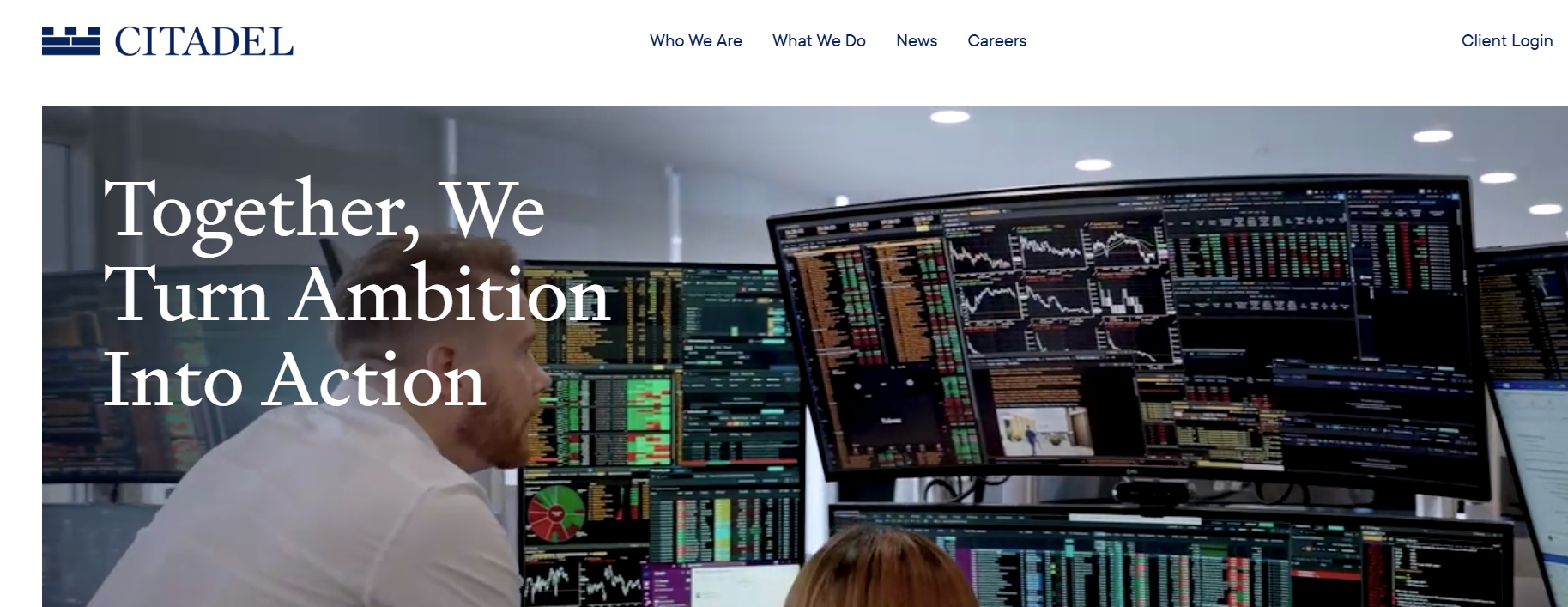
  • Citadel: Inside a Leading Quantitative Hedge Fund

    Citadel: Inside a Leading Quantitative Hedge Fund

    This blog post explores Citadel, a leading quantitative hedge fund known for its innovative trading strategies and robust performance. We discuss the firm’s origins, achievements, lines of business, competitors, and competitive advantages. We also examine the future challenges and opportunities that Citadel may face in the ever-evolving financial landscape.

    Introduction:

    In today’s rapidly evolving financial landscape, quantitative trading has emerged as a critical strategy that many of the world’s most successful hedge funds employ. One such leader in this space is Citadel, a global financial institution known for its cutting-edge technology, high-performance culture, and impressive track record. With its founder, Ken Griffin, at the helm, Citadel has become synonymous with innovation and success in quantitative finance.

    The importance of quantitative trading in modern finance is paramount. By utilizing advanced mathematical models, algorithms, and data analysis techniques, quantitative trading seeks to identify profitable opportunities in financial markets while minimizing human biases and emotions. This data-driven approach has proven highly effective, enabling firms like Citadel to outperform traditional investment strategies consistently.

    In this blog post, we will delve deep into the world of Citadel, exploring its origins, achievements, and prospects. Through this exploration, we aim to provide readers with a comprehensive understanding of this leading quantitative hedge fund and its role in shaping the future of finance. Join us as we embark on a fascinating journey into the world of Citadel, a trailblazer in quantitative trading.

    Origins of Citadel:

    Kenneth C. Griffin, the founder and CEO of Citadel, started his journey in finance while studying at Harvard University. He began trading stocks from his dorm room and quickly gained a reputation as a prodigy in investing. Armed with a keen interest in finance and a background in mathematics, Griffin graduated with a degree in economics in 1989. Griffin was inspired to create his investment firm after an internship at a hedge fund.

    With the support of an initial investment from Frank Meyer, the founder of Glenwood Capital, Ken Griffin founded Citadel in 1990. The company began as a small hedge fund focusing on quantitative trading strategies. Griffin’s vision was to create an institution that would leverage cutting-edge technology, data analysis, and a team of top talent to outperform traditional investment strategies. From the outset, Citadel focused on building a foundation of innovation and a commitment to staying at the forefront of financial markets.

    Citadel experienced early success, with its innovative trading strategies delivering impressive returns. The fund’s initial investment of $4.6 million quickly grew as its strategies effectively navigated the complexities of financial markets. As a result, Citadel began attracting more investors and expanded its assets under management. Over the years, the firm continued to refine its approach and invest in technology and talent, enabling it to grow into one of the world’s largest and most successful hedge funds. Today, Citadel manages billions of dollars in assets and has established itself as a dominant force in quantitative finance.

    Achievements and Milestones:

    Throughout its history, Citadel has consistently delivered solid returns for its investors, often outperforming its peers and broader market indices. The firm’s quantitative strategies and commitment to innovation and technological advancements have successfully navigated various market conditions. Citadel’s track record of high performance has cemented its status as a leading player in the hedge fund industry. It has helped attract significant investments from institutional investors, pension funds, and high-net-worth individuals.

    Citadel has made several notable investments and trades over the years, demonstrating its ability to identify opportunities across various asset classes and market sectors. Some of these include profiting from the subprime mortgage crisis in 2007-2008, successfully navigating the European sovereign debt crisis, and capitalizing on market volatility during the COVID-19 pandemic. These successful trades highlight the firm’s adaptability and expertise in risk management and quantitative analysis.

    Citadel’s success has not gone unnoticed in the financial sector. The firm has received numerous awards and accolades for its quantitative trading and asset management achievements. These include being ranked among the top hedge funds globally by various publications and receiving recognition for innovation and technology in finance. Additionally, Ken Griffin, the founder, and CEO of Citadel, has been recognized as one of the most influential and successful individuals in the world of finance, regularly appearing on lists of top hedge fund managers and billionaires.

    Lines of Business, Products, and Services:

    Hedge fund operations

    Citadel’s primary line of business is its hedge fund operations, where it manages billions of dollars in assets for its clients. The firm employs diverse investment strategies, including quantitative trading, fundamental research, and macroeconomic analysis. Citadel’s hedge fund operations deliver consistent, risk-adjusted returns for its investors, regardless of market conditions.

    Quantitative trading strategies

    Citadel is renowned for its expertise in quantitative trading, a vital driver of the firm’s success. These strategies involve using advanced mathematical models, algorithms, and vast amounts of data to identify and capitalize on patterns and trends in financial markets. By leveraging cutting-edge technology and a team of highly skilled researchers, Citadel has developed and implemented numerous successful quantitative trading strategies across various asset classes and market sectors.

    Citadel Securities

    In addition to its hedge fund operations, Citadel operates a separate market-making business called Citadel Securities. This division provides liquidity to global financial markets by acting as a buyer and seller of various financial instruments, including stocks, bonds, options, and futures. As a market maker, Citadel Securities helps to facilitate efficient and orderly trading in financial markets, benefiting both retail and institutional investors. The firm’s market-making business has grown significantly over the years, and it is now one of the largest traders by volume on major exchanges worldwide.

    Other services and offerings:

    Beyond its hedge fund and market-making businesses, Citadel also offers its clients a range of additional services, including risk management solutions, portfolio optimization, and customized investment products. These services help clients meet their specific investment objectives and manage their exposure to various market risks. By providing a comprehensive suite of financial products and services, Citadel has positioned itself as a one-stop shop for sophisticated investors seeking innovative solutions to their investment needs.

    Competitors:

    Renaissance Technologies

    Renaissance Technologies, founded by mathematician James Simons, is one of Citadel’s primary competitors in the quantitative hedge fund space. The firm is known for its secretive nature and highly successful Medallion Fund, which has delivered outstanding returns over the years. Like Citadel, Renaissance Technologies uses advanced mathematical models and algorithms to drive investment decisions.

    Two Sigma

    Two Sigma is another prominent competitor in quantitative finance. David Siegel and John Overdeck founded the firm using sophisticated machine learning techniques and artificial intelligence to identify and capitalize on market opportunities. Two Sigma has experienced significant growth since its inception and now manages tens of billions of dollars in assets.

    DE Shaw

    DE Shaw, founded by David E. Shaw, is a pioneer in quantitative hedge funds. The firm has been at the forefront of applying advanced computational techniques to finance since its inception in the late 1980s. DE Shaw is known for its interdisciplinary approach, which combines expertise in mathematics, computer science, and finance to develop innovative investment strategies.

    Bridgewater Associates

    While not exclusively a quantitative hedge fund, Bridgewater Associates, founded by Ray Dalio, is another significant competitor in the asset management industry. The firm is the world’s largest hedge fund. It is known for its unique investment approach, which combines macroeconomic analysis, risk parity strategies, and systematic investment methods to manage its assets.

    AQR Capital Management

    AQR Capital Management, founded by Cliff Asness, is another well-known hedge fund focusing on quantitative investment strategies. The firm employs various systematic and factor-based strategies to manage its assets, including momentum, value, and quality investing. AQR is also known for its research-driven approach and commitment to sharing its insights with the broader investment community.

    Competitive Advantages of Citadel:

    Cutting-edge technology and research

    Citadel has consistently been at the forefront of technological advancements in finance. The firm heavily invests in research and development, continually refining and expanding its quantitative models and algorithms. This commitment to innovation has allowed Citadel to maintain a competitive edge in the industry and capitalize on new opportunities in the ever-evolving financial landscape.

    Attracting top talent from diverse fields

    One of Citadel’s key strengths is its ability to attract and retain some of the brightest minds from various disciplines, including mathematics, computer science, engineering, and finance. The firm’s interdisciplinary approach allows it to benefit from multiple perspectives and expertise, fostering a culture of innovation and creative problem-solving. Citadel’s dedication to nurturing top talent has been crucial to its success in the competitive world of quantitative finance.

    High-performance culture

    Citadel has cultivated a high-performance culture that rewards results and encourages excellence. The firm sets high standards for its employees, fostering collaboration, continuous learning, and personal growth. This performance-driven culture has been instrumental in driving Citadel’s success and ensuring that it remains at the top of its game in the fast-paced world of finance.

    Global presence and market reach

    Citadel has established a solid global presence, with offices in key financial centers across North America, Europe, and Asia. This geographic diversification enables the firm to access a wide range of investment opportunities and gives it a deeper understanding of regional market dynamics. Citadel’s extensive market reach allows it to stay ahead of emerging trends and capitalize on unique opportunities, further solidifying its position as a leading quantitative hedge fund industry player.

    The Future of Citadel:

    Citadel will face challenges and opportunities as the financial landscape grows. Increased competition from other quant funds and changing market conditions may pressure the firm’s performance. However, Citadel’s commitment to innovation and ability to adapt to changing market dynamics will likely enable it to continue finding new opportunities and maintaining its competitive edge. Additionally, the ongoing digital transformation in finance will allow Citadel to explore and capitalize on new data sources and analytical techniques. Artificial intelligence (AI) and machine learning (ML) will likely play an increasingly significant role in quantitative trading. These technologies could revolutionize how hedge funds like Citadel analyze data, make predictions, and execute trades. By investing in AI and ML research and incorporating these advanced techniques into its trading strategies, Citadel can further enhance its ability to identify and exploit market inefficiencies, ultimately driving higher returns for its investors. As Citadel looks to the future, it may explore opportunities to expand into new markets or asset classes. This expansion could involve tapping into emerging markets offering unique growth prospects and diversification benefits or exploring alternative asset classes, such as cryptocurrencies and digital assets. By continually adapting its investment strategies and seeking new opportunities, Citadel can ensure it remains at the forefront of the quantitative hedge fund industry and continues to deliver solid returns for its investors.

    Conclusion:

    In this blog post, we have explored the origins of Citadel, delved into its many achievements and milestones, and discussed its various lines of business, products, and services. We have also examined Citadel’s competitors, its competitive advantages, and the future challenges and opportunities it may face. As a pioneer in quantitative trading, Citadel has firmly established itself as a leading player in the hedge fund industry. The firm’s commitment to cutting-edge technology, research, and top talent has consistently delivered solid returns for its investors. We expect Citadel to maintain its prominence in the rapidly evolving world of finance. Investors and finance professionals must stay informed about the latest trends and developments as the financial landscape transforms and evolves. By staying abreast of these changes and understanding the implications for firms like Citadel, readers can gain valuable insights into the future of quantitative trading and the broader finance industry.